How to Read a Pre-Workout Label: The Six Numbers That Decide It
Share
Updated September 18, 2026 · 7 minute read
Two tubs sit next to each other. Both say “pump.” Both say “focus.” One is $30 and one is $45, and nothing on the front of either one tells you which is the better buy.
The answer is on the back, in about six numbers. Here is how to find them.
1. Citrulline — and the malate trick
L-Citrulline is the pump ingredient. Your body converts it to arginine, which raises nitric oxide, which widens blood vessels. That is the mechanism behind the full-muscle feeling during a session, and it is one of the better-supported ingredients in the category.
Here is where labels get slippery. Citrulline shows up in two forms:
- L-Citrulline — pure.
- Citrulline Malate 2:1 — two parts citrulline bonded to one part malic acid.
A label advertising “6,000 mg Citrulline Malate” is giving you roughly 4,000 mg of actual citrulline. The other 2,000 mg is malic acid. That is not fraud — malate has its own rationale — but the big number on the front is not the number that does the work.
Studies on pure L-Citrulline for blood flow generally run from 3 grams up. So:
Do the conversion before you compare. If it says malate 2:1, multiply by 0.67. Then line it up against the pure-citrulline product next to it. A lot of “higher dose” tubs shrink considerably once you do.
2. Beta-alanine — the one number that is fixed
Beta-alanine raises muscle carnosine, which buffers the acid build-up that ends a set early. It is the ingredient behind the extra two reps, not the extra energy.
What makes it useful for label-reading is that the studied dose is unusually specific: 3,200 mg per day. Not “up to.” Not “clinically dosed.” That number.
So beta-alanine works as a quick honesty test. A tub with 3,200 mg is dosed to the research. A tub with 1,600 mg is at half. A tub with 800 mg put it there so the ingredient could appear on the label.
And the tingle is not the dose. That prickling on your face and hands is paresthesia — a harmless nerve response. It shows up at doses well below the effective one and it fades as you saturate over weeks. Plenty of people judge a pre-workout by how much it tingles. That is measuring the side effect, not the result.
3. Caffeine — and the part nobody prints
Most pre-workouts land between 150 and 400 mg per scoop. For reference, a strong cup of coffee is around 100 to 150 mg.
Three things matter more than the number itself:
Tolerance builds in one to two weeks. This is the single most expensive fact in the category. The tub that felt incredible on day one feels like nothing on day twenty, and the instinct is to go buy something stronger. The ingredient did not stop working — your adenosine receptors adapted. Cycling off for a week resets more than upgrading does.
The half-life is five to six hours. A 300 mg scoop at 5 p.m. still has 150 mg circulating at 11 p.m. If you train in the evening and sleep badly, the pre-workout is a candidate.
More is not better past a point. The performance research clusters around 3 to 6 mg per kilogram of body weight. For a 180 lb person that is roughly 245 to 490 mg. Above that you get more side effects, not more output.
4. The ® symbol is a real signal
This one is not obvious and it is genuinely useful.
When you see a registered trademark on an ingredient — CarnoSyn® beta-alanine, AlphaSize® alpha-GPC, TeaCrine® theacrine, Nitrosigine®, Creapure® — the brand is paying a licensing fee to use that name, and the license usually comes with a minimum effective dose and testing requirements.
Generic beta-alanine and CarnoSyn® are the same molecule. The difference is that one is a commodity with variable sourcing and the other is a specified, audited supply chain someone chose to pay more for.
It is not a guarantee of a good formula. A tub can have three trademarked ingredients and still be underdosed elsewhere. But a company paying licensing fees is a company that decided the ingredients were worth spending on, and that is worth noticing.
5. Creatine in a pre-workout is almost always a garnish
The daily dose of creatine that the research supports is 3 to 5 grams. Most pre-workouts list somewhere between 500 mg and 2 grams.
That is not useless — creatine works by saturation over time, so it contributes. But if creatine on the label is the reason you picked the tub, check the number. If it is under 3 grams, you are not getting a creatine dose from your pre-workout, and you should be taking monohydrate separately. It costs almost nothing and the dose does not change.
We went deeper on this in our guide to creatine — the dosing section applies to everyone, not just women.
6. Proprietary blends
A “Focus Matrix — 690 mg” or an “Energy Blend — 175 mg” tells you the total weight of several ingredients and nothing about how that weight is split.
Under U.S. labeling rules, ingredients inside a blend are listed by descending weight. So the first ingredient is the biggest share — but it could be 90% of the blend or 34%. You cannot tell, which is the point of the format.
Blends are not automatically dishonest. Sometimes a company is protecting a formula it actually developed. But when a blend is the wrapper around the ingredients you specifically came for, you have no way to evaluate the product, and neither does anyone else.
The test: can you calculate how much of the ingredient you care about you are getting? If not, you are buying on faith.
7. The stimulants past caffeine — read this part slowly
Some formulas add compounds well beyond caffeine. The most common are yohimbine and rauwolscine (alpha-yohimbine), often listed at 1 to 3 mg.
These are alpha-2 adrenergic antagonists. They are potent at small doses, they stack on top of caffeine rather than replacing it, and the side effect profile is real: anxiety, elevated heart rate, elevated blood pressure, nausea. Several countries — including the UK, Canada and Australia — restrict or prohibit yohimbine in supplements.
This does not make a high-stimulant formula bad. It makes it a specific tool for a specific person. If you are new to pre-workout, sensitive to caffeine, on blood pressure medication, prone to anxiety, or unsure — a high-stim formula is not where you start. Start lower and find out how you respond.
If a label lists rauwolscine, yohimbine, DMHA or synephrine, that is not a detail to skim. That is the most important line on the panel.
8. Then do the arithmetic
Two numbers, and they are never next to each other:
Servings per container. Pre-workouts run from 20 to 40 servings. A 20-serving tub at $45 and a 40-serving tub at $45 are not the same product at the same price.
Price divided by servings. That is your cost per session. Do it for every tub you are considering, write the three numbers down, and the shelf reorders itself.
Then ask the only question that matters: is the more expensive one more expensive because of what is in it, or because of the label design? After sections 1 through 7, you can actually answer that.
What our panels say
We would rather show you the numbers than tell you we are the best.
| Evoltage™ | Blastsync™ | |
|---|---|---|
| Caffeine | 300 mg | 200 mg |
| Citrulline | 4,500 mg pure + 1,000 mg malate | 2,000 mg malate 1:1 |
| Beta-alanine | 3,200 mg CarnoSyn® | — |
| Creatine | 1,500 mg (HCl + mono) | 2,000 mg monohydrate |
| Alpha-GPC | 200 mg AlphaSize® | — |
| Proprietary blends | None | 690 mg Focus Matrix |
| Added stimulants | Rauwolscine 1 mg | None |
| Sweetener | Monk fruit | Sucralose, Ace-K |
| Servings | 20 | 30 |
Evoltage™ is the high-stimulant, fully disclosed one: beta-alanine at the exact studied dose, pure citrulline rather than a malate equivalent, three licensed ingredients, no blends, monk fruit. It also contains 300 mg of caffeine and 1 mg of rauwolscine — which, per section 7, means it is not a beginner product. Start at half a scoop.
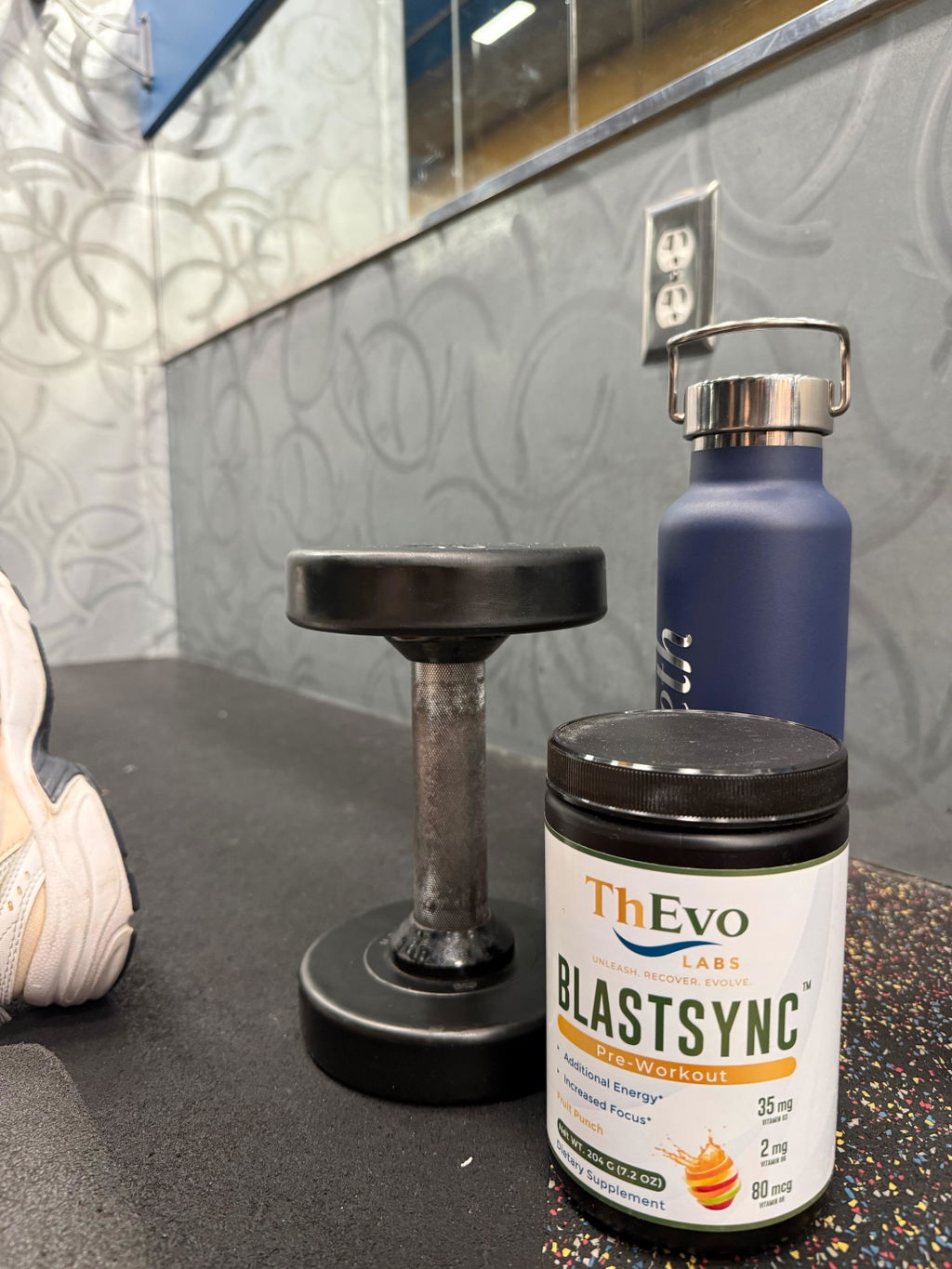
Blastsync™ is the moderate one: 200 mg of caffeine, no added stimulants beyond it, 30 servings. If you are new to this, or you train in the evening, this is the one to start with. It does carry a 690 mg Focus Matrix — by our own test in section 6, that is the weakest line on its panel, and we are telling you rather than hoping you miss it.
Certificates of analysis are available by lot for both. Email info@thevolabs.com with your lot number and we will send it.
Frequently asked
How much citrulline should a pre-workout have?
Research on pure L-Citrulline for blood flow generally starts around 3 grams. If the label lists citrulline malate 2:1, multiply by 0.67 to get the actual citrulline content before comparing.
Why does pre-workout make me tingle?
Beta-alanine causes paresthesia, a harmless nerve response. It is not a measure of how strong the product is, and it fades over several weeks of consistent use.
How much caffeine is too much in a pre-workout?
Performance research clusters around 3 to 6 mg per kg of body weight. Past that you get more side effects rather than more performance. Your own tolerance, training time and sleep matter more than the number on the tub.
Is 3,200 mg of beta-alanine necessary?
It is the dose used in the research. Lower amounts are not harmful, they are simply below what the studies measured.
Should I take creatine separately from my pre-workout?
If your pre-workout has less than 3 grams, yes. Monohydrate is inexpensive and the 3 to 5 gram daily dose does not change.
What is rauwolscine?
Alpha-yohimbine, an alpha-2 adrenergic antagonist used at roughly 1 to 3 mg for energy and intensity. It stacks with caffeine, carries a meaningful side effect profile, and is restricted in supplements in several countries. Not a beginner ingredient.
These statements have not been evaluated by the Food and Drug Administration. These products are not intended to diagnose, treat, cure or prevent any disease. This article is general information, not medical advice. Pre-workout supplements are for healthy adults 18 and over. Talk to your healthcare professional before use if you have a heart condition, high blood pressure, anxiety, or take prescription medication, and do not use if you are pregnant or nursing.